

This article on “Can’t My College Kid Just Declare Independence” was updated on August 28, 2026.
The dad was smiling at me, like he had a special secret that no one else knew. He folded his arms, rocked back on his heels, and got ready to tell me just why he was never going to need my help getting his kids’ college paid for.
“I don’t have to worry about that,” he told me. “I’m going to have my kids ‘declare independence’ from me. Then my income won’t count on their financial aid forms, and the money for college will just roll on in.”
Then he tilted his head and smiled at me.
“That’s what I did when I was in college, and it worked out great for me.”
I’m so sorry to tell you, Dad—your information is long outdated.
Here’s why declaring independence from parents no longer helps students get extra financial aid for college.
The rules have changed.
Prior to 1992 a student could claim independence from his or her parents if 1) “the parents didn’t claim the student as an exemption on their tax returns for two years” and 2) “the student provided evidence that he or she was self supporting.” The laws have changed since 1992, though, so this definition of “independent student” is no longer valid.
Students are only considered “independent” if they satisfy one or more of the following criteria:
- The student is age 24 or older.
- The student is married.
- The student is working on a master’s or doctorate program.
- The student is a veteran of the U.S. Armed Forces.
- The student is currently serving on active duty in the U.S. Armed Forces for purposes other than training.
- The student has children who receive more than half their financial support from the student.
- The student has legal dependents, other than children or a spouse, who receive more than half their financial support from the student.
- The student, at any time since turning age 13, had both parents deceased, was in foster care, or was a dependent or ward of the court.
- The student is or was an emancipated minor, as determined by a court in the student’s state of legal residence.
- The student is or was in legal guardianship, as determined by a court in the student’s state of legal residence.
- The student was homeless, or was self-supporting and at risk of being homeless, at any time on or after July 1, 2025.
(You can see the official U.S. Department of Education page on this subject here.)
If the student doesn’t satisfy at least one of the above requirements, the student is presumed to be a “dependent student.”
“Dependent students” must show parent information on the FAFSA form except under “unusual circumstances” such as abuse, incarceration of a parent, human trafficking, having been granted refugee or asylee status, or having been abandoned by or estranged from your parents and not adopted.
Please carefully read the official U.S. Department of Education page on this subject to make sure you have full, complete detail on this subject.
If you’ve found this article because you’re a student who can’t get access to parent information for your FAFSA form, do this:
Students, see the kind, detailed article I provide for you here.
If you’re a student living with one of the circumstances listed above—or you are homeless or at risk of becoming homeless—please visit any local college financial aid office (even if you never intend to enroll at that college—explain your individual situation to an empathetic, caring adult, and get individualized help. A financial aid administrator can determine that you should be treated as independent anyway, through a discretionary process called a “dependency override.”
“Oh, no. Isn’t there any way around this?!?!”
There are a few creative ways around these rules. You can see the kind, sympathetic article I wrote for students whose parents refuse to fill out financial aid forms here.
Once you’ve done this, fill out the FAFSA financial aid form every October that you’ll have a kid in college the following fall.
Do this every fall, even if you’re rich.
Remember, getting financial aid and scholarships is only a small part of the picture when it comes to getting your kid through college debt-free.
For clear, step-by-step help with the whole process, get your copy of my book:
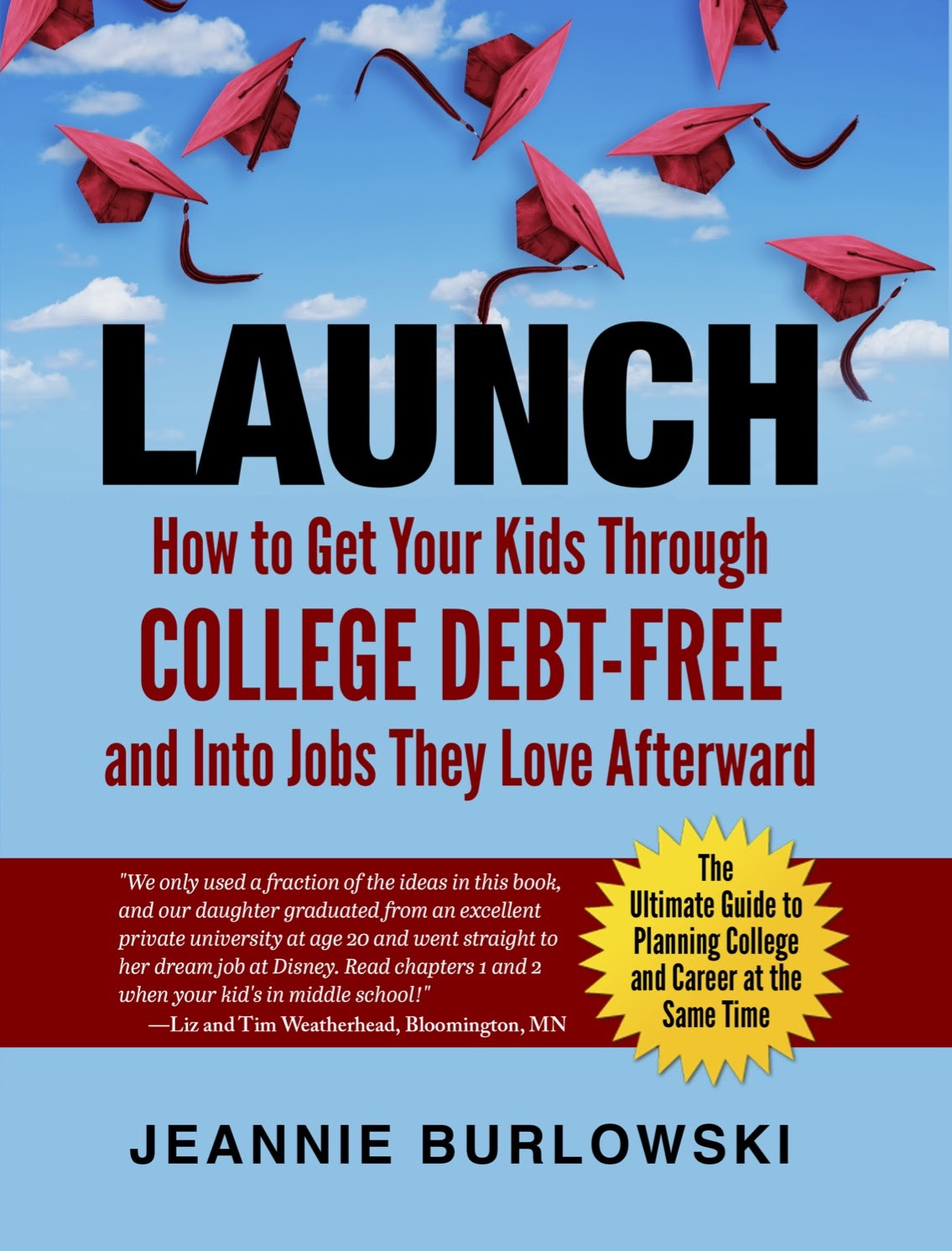
Important—> It’s a reference book, so nobody reads the whole thing cover to cover. Pick out what you need to read using the fast-paced, 10-minute video instructions here.
You can see hundreds of reviews of this book on Amazon by going to:
Read just one chapter of LAUNCH every 1–3 months while your child’s in middle school and high school, and you’ll know every viable strategy for debt-free college at exactly the right time to implement it.
And if your child’s already well past middle school? That’s OK; you can run to catch up. But the process of getting your kids through college debt-free goes more smoothly the earlier you start—especially if you’re not planning to save up any money to pay for college.
Let's you and I walk together toward the goal of debt-free college for your kids.
We can accomplish this no matter your current income level—even if your kids never get a single scholarship.
Your first step is getting regularly scheduled, free helpful articles from me—right in your email inbox. Quick, sign up here.
Do you have very specific questions for me about debt-free college and career for your kids?
My TRIBE Members get the most direct access to me—while feeling good that the pennies per day they spend on the TRIBE help me bring debt-free college strategy to families who could never afford to pay for it. Join my TRIBE Membership waiting list here. (The parent testimonials you'll see there are so encouraging!)
Who is Jeannie Burlowski?
Jeannie is a full-time academic strategist, podcast host, and sought-after speaker for students ages 12–26, their parents, and the professionals who serve them. Her writing, speaking, and podcasting help parents set their kids up to graduate college debt-free, ready to jump directly into careers they excel at and love. Her work has been featured in publications such as The Huffington Post, USA Today, Parents Magazine, and US News & World Report, as well as on CBS News.
Jeannie also helps students apply to law, medical, business, and grad school at her website GetIntoMedSchool.com. You can follow her on Bluesky @jburlowski.bsky.social.
This article was written by a caring human expert. AI tools may have assisted with research or editing.
This article was updated on August 28, 2026.